
 English
 Español
 Français
 Deutsch
 Italiano
 Português
 العربية
 Русский
 日本語
The need
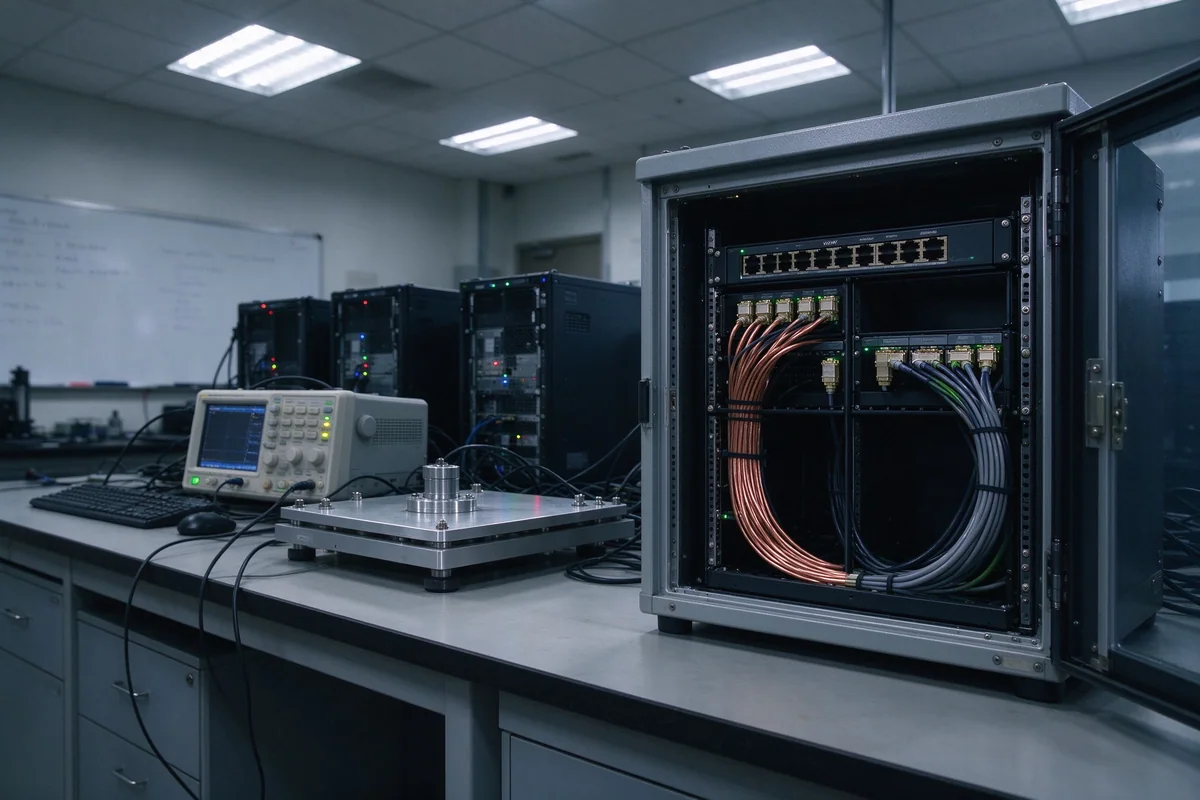
The building houses three research groups, two instrument rooms with their own acquisition servers, a microscopy room and about sixty workstations. Everything hung off one gigabit link to the campus core, so a full dataset copy ran overnight and the microscopy images queued behind it. Group leaders also wanted their traffic separated, because two of them run licensed software that must not be reachable from the other lab.
What was specified
| Model | Qty | Role in the project |
|---|---|---|
| RS1024K-48L-6S-10G-M | 2 | Lab-floor aggregation, 48 ports with six 10G SFP links to the core and the instrument rooms |
| RS1025K-12S-10G-M3 | 4 | Ten-gigabit server links for the acquisition and microscopy servers |
| RS1025K-8LG-2S-10G | 6 | 2.5G to the workstation clusters, one 10G SFP back to the floor aggregation |
Why that split
The instruments are the only devices that move datasets of any size, so the 10G ports go there and the workstations get 2.5G, which is already more than a bench needs for literature and analysis work. Aggregating at floor level keeps the core link count at two and gives each lab group a VLAN that cannot be reached from the other. The microscopy room keeps its own switch so the image server is not competing with a dataset copy for the same uplink.
Result
- A full dataset copy finishes inside a working session instead of overnight.
- Licensed software on one lab VLAN is unreachable from the other groups.
- The campus core sees two uplinks from the building, not sixty workstations.
Quantities in the table are the planned build, not a bill of materials for a specific tender.
