
 English
 Español
 Français
 Deutsch
 Italiano
 Português
 العربية
 Русский
 日本語
The requirement
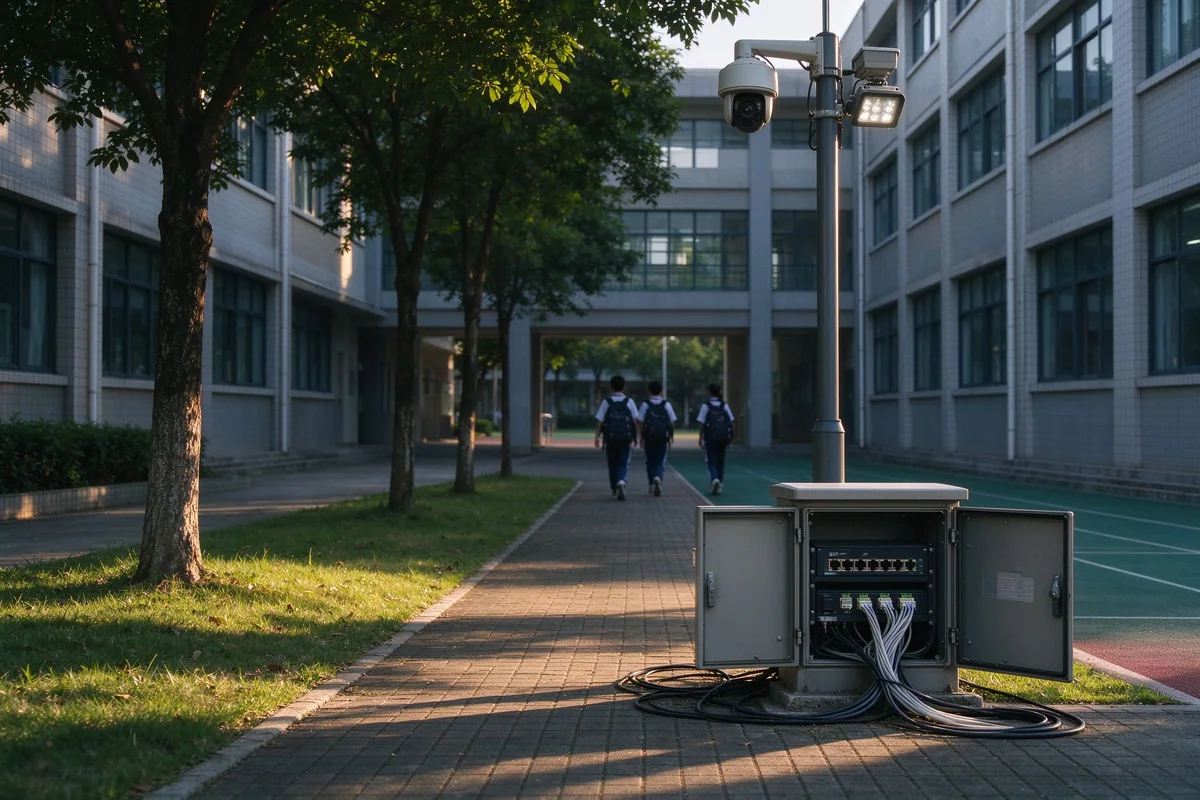
A two-building campus in South-East Asia carried 96 IP cameras on a mix of unmanaged 8-port PoE injectors and one consumer-grade switch per floor. Cameras dropped off when evening lighting switched on, and the integrator had no per-port power data to prove which switch was at fault. The site had to stay live during the retrofit, and the existing CAT5e runs were not going to be replaced.
What was specified
| Model | Qty | Role in the project |
|---|---|---|
| RS1024K-P24-2S-M | 4 | 24-port L2 PoE switch per building floor, VLAN per camera group |
| RS1008K-P8-2S-M | 6 | 8-port PoE edge in cabinets with 5-7 cameras |
| RS1025K-16LG-2S-10G | 2 | 2.5G aggregation to the control room, 10G SFP+ uplink |
Why this split
The 24-port models were placed where camera density was highest, because that is where a single oversized PoE load is easiest to isolate and where per-port power readings matter most. The 8-port units covered small cabinets, so no cabinet needed a 24-port chassis. The two 2.5G switches were added to the design for one reason: the control-room recorder and the NVR mirror both sat behind one gigabit link, and that link — not the cameras — was the actual bottleneck.
Result
- PoE budget sized per floor before the order, so no switch ran near its limit on a summer evening.
- One firmware behaviour and one RMA contact across 12 switches instead of four vendors.
- Camera groups isolated by VLAN, which turned a 96-camera fault-finding job into a per-floor check.
Customer and site details are anonymised. Configuration is a reference design, not a quotation; port counts and PoE budgets are confirmed per project.
