
 English
 Español
 Français
 Deutsch
 Italiano
 Português
 العربية
 Русский
 日本語
The need
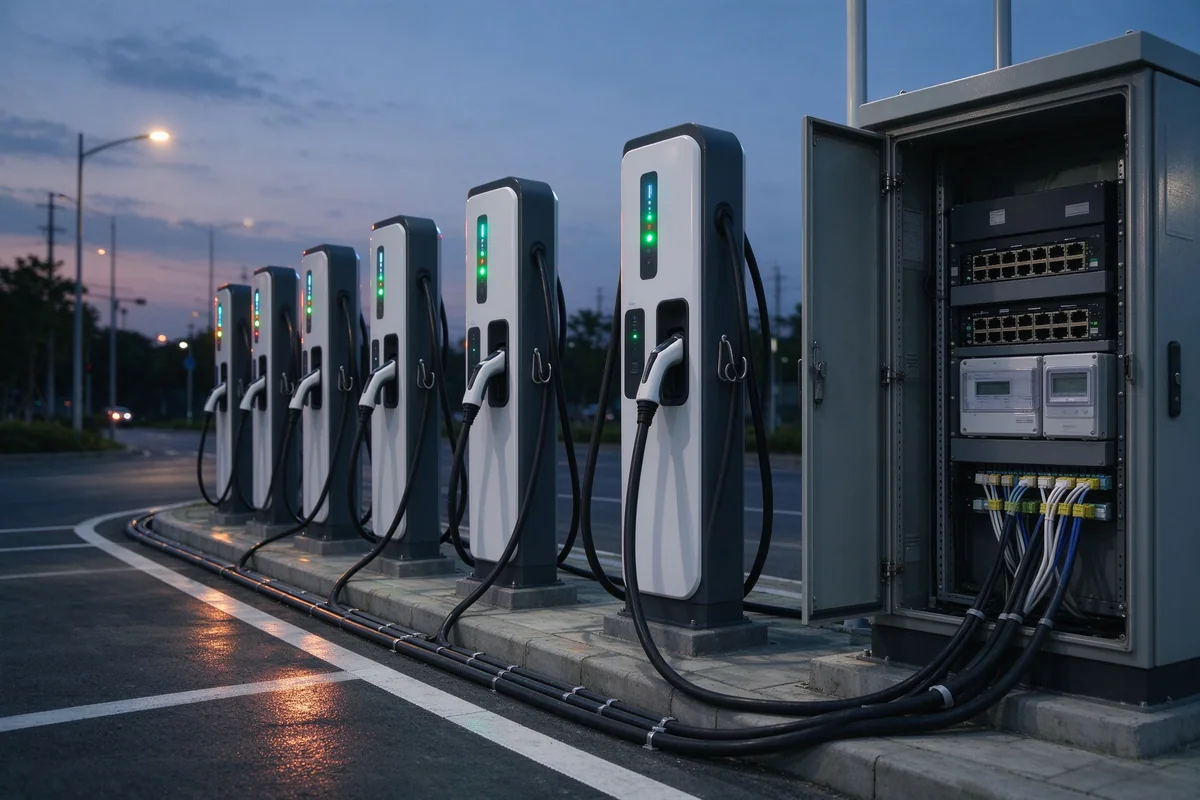
The hub sits in an open yard beside a highway, so cabinets take sun, rain and the temperature swing of the season. Payment terminals need PoE and must not share a broadcast domain with camera streams. Dispensers occasionally lock up and the operator wants to power-cycle one from the office instead of sending a van. The site router is 300 m away in the shop building.
What was specified
| Model | Qty | Role in the project |
|---|---|---|
| RS1024K-P16-4S-MI | 4 | Canopy PoE: payment terminals, cameras, dispenser controllers, fibre uplink |
| RS1008K-4S-M3-I | 2 | Payment kiosk and entrance barrier, managed industrial, four fibre ports |
| RS1001G-1S | 4 | Media converters on the 300 m run to the shop building |
Why that split
PoE and the managed platform sit under the canopy, where the terminals and cameras are, so the yard needs no extra power cabinets. Payment, video and dispenser control get their own VLANs on the same switches, which is what the operator actually asked for. Industrial models were chosen for the outdoor temperature swing, and one fibre run to the shop replaces four separate copper links that could not span the yard.
Result
- A locked dispenser is power-cycled from the office, with no site visit.
- Payment traffic never shares a broadcast domain with camera streams.
- Only one fibre pair reaches the shop building instead of four copper runs.
Quantities in the table are the planned build, not a bill of materials for a specific tender.
